
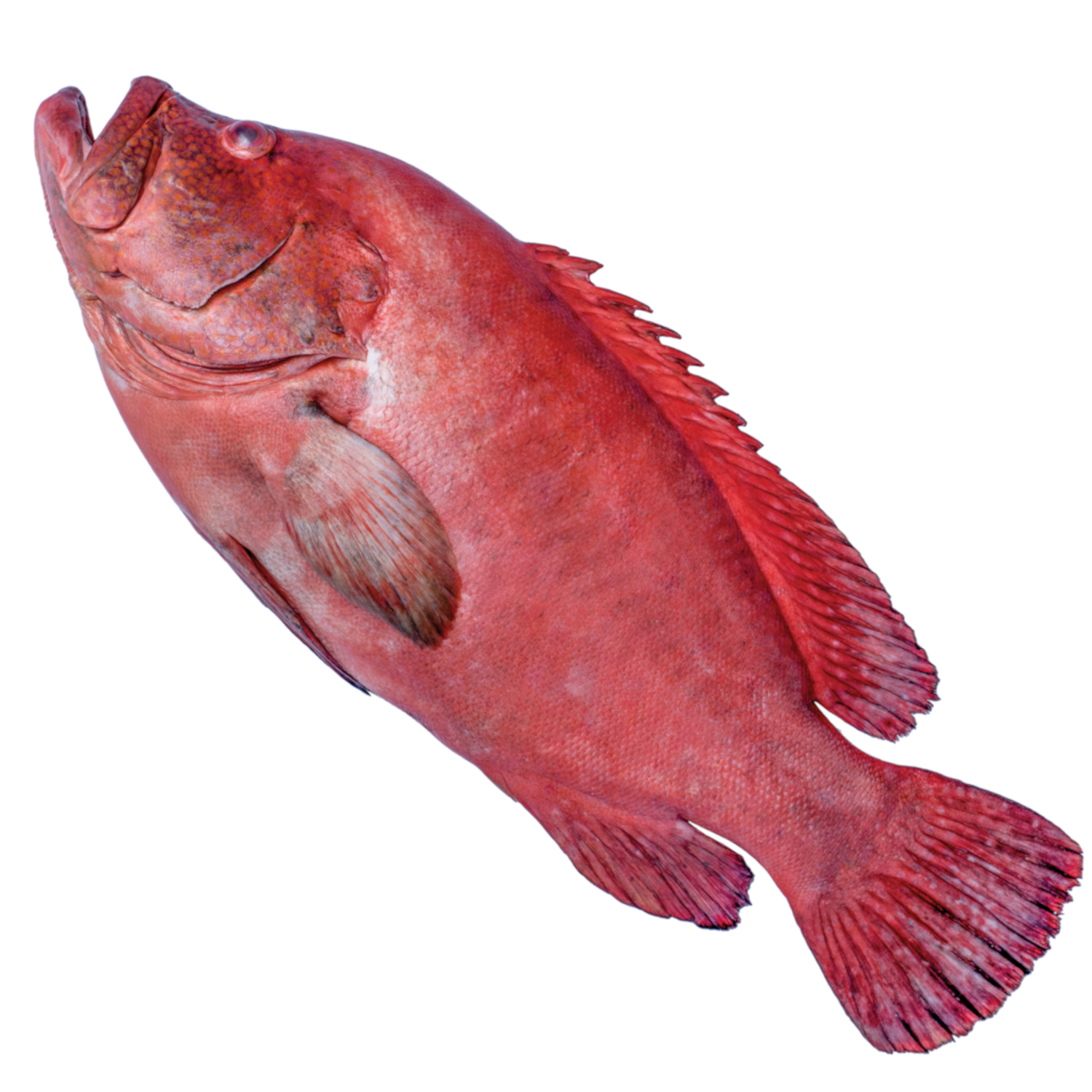
Red grouper is a large, robust marine fish widely recognized for its reddish-brown coloration and stout, muscular body. Adults can grow up to about 1 meter in length and weigh over 20 kilograms, making them one of the more sizable species of grouper found in the western Atlantic Ocean. Their broad heads, powerful jaws, and strong teeth allow them to feed efficiently on a diet of smaller fish, crabs, shrimp, and other crustaceans. Red groupers are ambush predators, often lying in wait among rocky ledges, reefs, or artificial structures before quickly striking at unsuspecting prey.
These fish are commonly found in tropical and subtropical waters of the western Atlantic, including the Gulf of Mexico and the Caribbean Sea. They prefer habitats with complex structures, such as coral reefs, rocky bottoms, and shipwrecks, which provide shelter, breeding grounds, and abundant food sources. Red groupers are generally solitary and territorial, exhibiting site fidelity by often remaining within a specific area for long periods.
Red groupers are highly valued both commercially and recreationally for their firm, mild-flavored flesh, making them a popular choice for grilling, baking, or frying. Despite their abundance, overfishing and habitat degradation have put pressure on some populations, making sustainable management crucial to maintain healthy stocks. Ecologically, red groupers play an important role as mid-to-top level predators, helping control populations of smaller reef fish and maintaining the balance of reef ecosystems. Their combination of ecological importance and culinary value makes the red grouper a vital species in both marine environments and human economies.
Reviews
There are no reviews yet.