
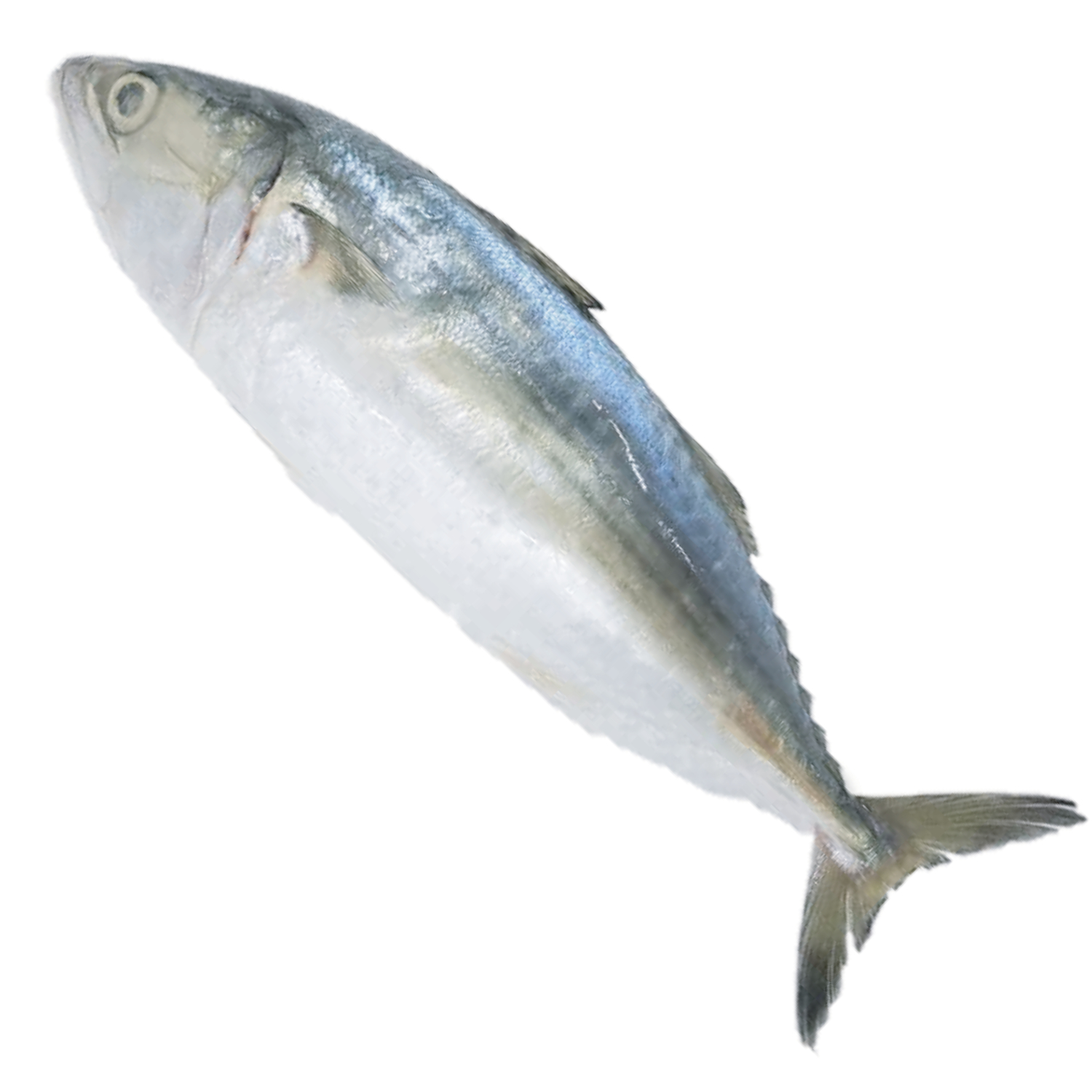
The Indian mackerel is a small, fast-swimming marine fish commonly found in the coastal waters of the Indian Ocean and surrounding seas. Known for its streamlined body and silvery sheen with faint vertical stripes, it is well adapted for life in open water, where it moves in large schools. This schooling behavior helps protect it from predators and allows it to efficiently locate plankton and small organisms, which make up the bulk of its diet. The fish typically inhabits warm, shallow waters and is especially abundant along the coasts of South and Southeast Asia.
Indian mackerel plays a significant role in both the ecosystem and human economy. Ecologically, it serves as an important link in the marine food chain, feeding on microscopic organisms while also being prey for larger fish, seabirds, and marine mammals. Economically, it is one of the most widely consumed fish in many coastal regions, valued for its rich flavor and high nutritional content. It is a good source of protein, omega-3 fatty acids, and essential vitamins, making it a healthy dietary choice.
In addition to its nutritional benefits, Indian mackerel is important to local fisheries and livelihoods. It is often caught using nets and traditional fishing methods, supporting small-scale fishermen as well as commercial industries. Whether grilled, fried, or curried, this fish remains a staple in many cuisines, reflecting its cultural and economic importance across the regions where it is found.
Reviews
There are no reviews yet.