
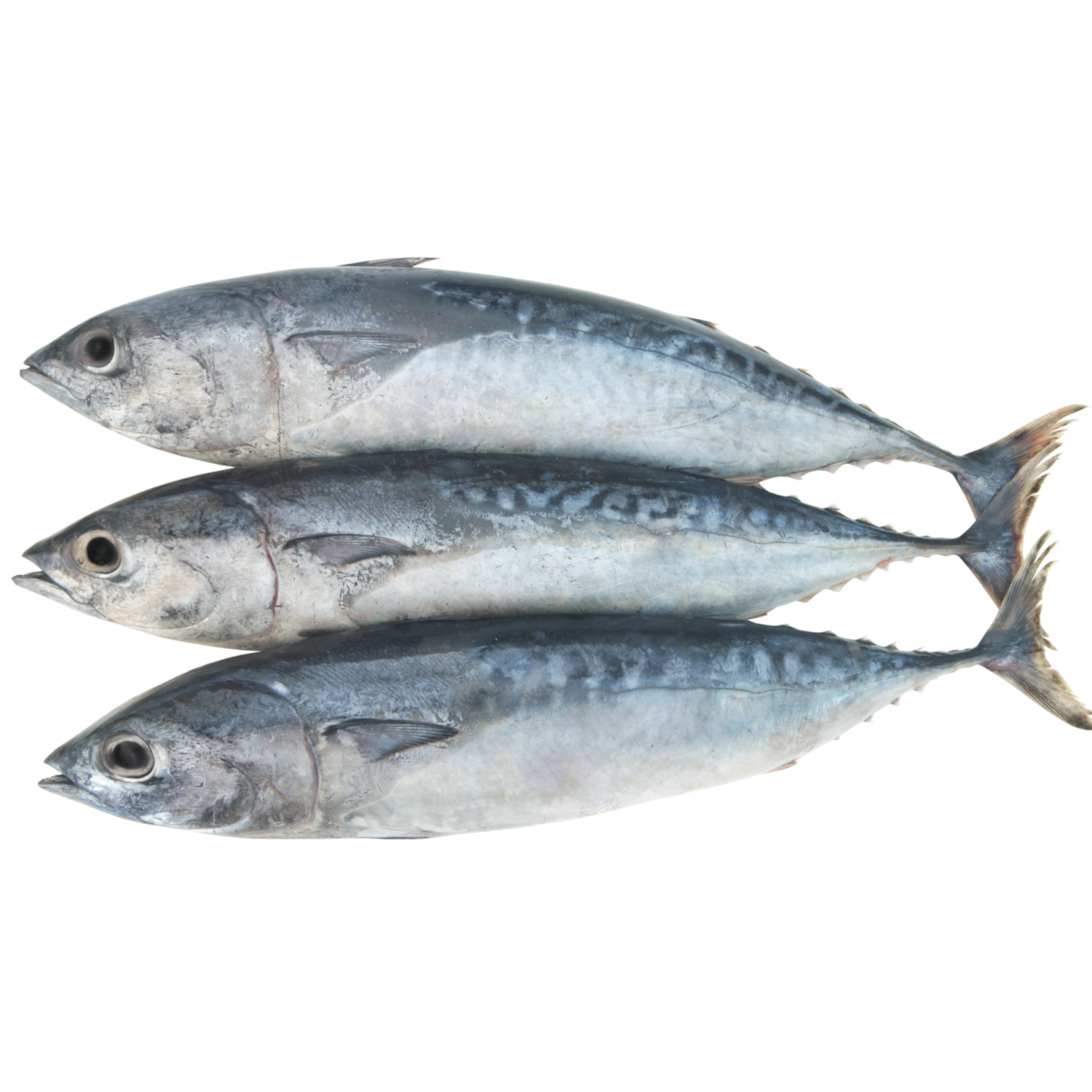
Frigate tuna, scientifically known as Auxis thazard, are small to medium-sized members of the tuna family recognized for their streamlined, torpedo-shaped bodies and remarkable swimming speed. They typically grow up to about 60–70 centimeters in length and weigh a few kilograms, making them smaller than many other tuna species. Their bodies are dark blue or greenish on the back with distinctive wavy or broken lines, while their undersides are silvery, providing effective camouflage in the ocean.
These fish are widely distributed in tropical and subtropical oceans around the world, including the Atlantic, Indian, and Pacific Oceans. Frigate tuna usually inhabit coastal and offshore waters, often forming large schools near the surface. They are highly active and migratory, constantly moving in search of food and suitable environmental conditions.
Frigate tuna feed mainly on small fish, squid, plankton, and crustaceans. Their speed and agility make them efficient predators, allowing them to chase and capture fast-moving prey. Ecologically, they play an important role in marine food chains as both predators and prey for larger fish, seabirds, and marine mammals.
In addition to their ecological importance, frigate tuna are valuable to small-scale and commercial fisheries in many regions. They are commonly used as food, either fresh, dried, or canned, and are also sometimes used as bait in larger fishing operations. Although they are generally abundant, responsible fishing practices are important to ensure their populations remain stable.
Reviews
There are no reviews yet.